
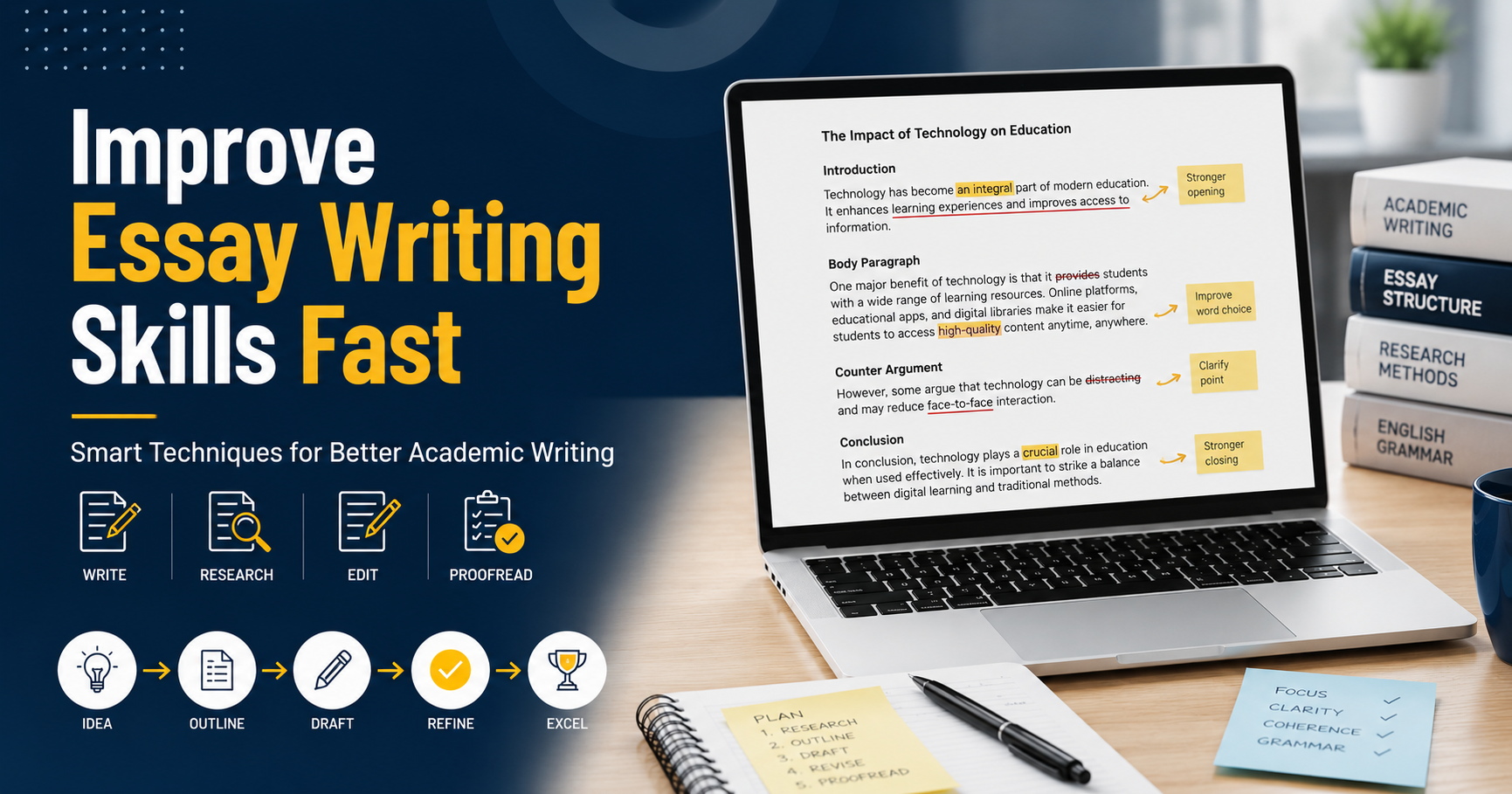
How to Improve Essay Writing Skills Fast: A Practical Guide for Students
Whether you are facing a tight deadline for a university assignment or simply want to boost your confidence in the essay room, learning how to improve essay writing skills fast can feel like a daunting task. The good news is that with a few focused strategies you can see noticeable progress within days rather than weeks. In this article I will walk you through the most effective techniques, from organising your thoughts to polishing your prose, all explained in a friendly, step‑by‑step manner.
Why Speed Doesn’t Have to Mean Sloppiness
Many students assume that writing quickly inevitably leads to lower quality. That belief often stems from a lack of clear structure and from trying to juggle research, drafting and editing all at once. When you break the process into manageable stages and apply proven habits, you can produce work that is both swift and scholarly. The key is to develop a routine that makes each stage feel natural rather than labourious.
Adopt a Mini‑Planning Ritual
Before you even open a word processor, spend five minutes sketching a quick outline. Jot down the main argument, two or three supporting points and the evidence you plan to use. This tiny act creates a mental roadmap that prevents you from wandering off‑topic and reduces the amount of time you spend rewriting later.
Use the “One Paragraph, One Idea” Rule
Each paragraph should convey a single, clear idea that ties back to your thesis. When you keep paragraphs focused, you avoid the temptation to cram unrelated information into the same block of text, which often leads to confusing, wordy essays. A clear paragraph structure also makes editing faster because you can spot redundancies at a glance.
Building a Strong Foundation: Research Made Easy
Effective essay writing rests on solid research, yet many students waste hours scrolling through irrelevant sources. The trick is to be selective from the outset.
Start with Reputable Databases
University libraries provide access to databases such as JSTOR, Scopus and the British Library’s online collections. When you begin your search on these platforms, you are more likely to encounter peer‑reviewed articles that are directly relevant to your topic. For quick statistics, the Office for National Statistics (ONS education data) offers up‑to‑date figures that can be cited with confidence.
Apply the 3‑Minute Skim
Read the abstract, look at the headings and glance at the conclusion. If the article addresses your research question, download it; otherwise move on. This habit prevents you from getting stuck in an endless rabbit‑hole of reading.
Organise Sources with a Simple Spreadsheet
Create columns for author, year, title, key findings and a brief note on how the source supports your argument. A tidy spreadsheet saves you time later when you need to insert citations or compile a bibliography.
Drafting Efficiently: From Blank Page to First Draft
The biggest barrier to fast essay writing is often the fear of the blank page. The following techniques turn that fear into momentum.
Write in Short, Timed Bursts
Set a timer for 15 minutes and aim to fill the page with whatever comes to mind, without worrying about perfection. This method, sometimes called the Pomodoro technique, keeps your mind focused and reduces the tendency to over‑edit while drafting.
Adopt a Conversational Voice First
Imagine you are explaining the topic to a friend over a cup of tea. Using a natural, conversational tone helps you articulate ideas clearly and speeds up the writing process. You can always formalise the language during the revision stage.
Leave Gaps for Later Research
If you hit a point where you need additional evidence, insert a short placeholder such as “[insert statistic]”. Continue writing the surrounding sections; you will return to fill the gap during the editing phase, which keeps the flow uninterrupted.
Polishing Your Essay Without Losing Time
Revising is where many students believe the real work happens, yet with a systematic approach you can edit efficiently.
Read Aloud to Spot Awkward Sentences
When you read your essay aloud, the ear catches repetitions, run‑on sentences and unclear phrasing that the eye often misses. This simple trick can dramatically improve readability in just a few minutes.
Check Structure Before Grammar
First verify that each paragraph follows the “one idea” rule and that the overall essay flows logically from introduction to conclusion. Once the structure is solid, focus on grammar, punctuation and citation style.
Use Technology Wisely
Tools such as Grammarly or the built‑in spell‑check in Microsoft Word are helpful for catching minor errors, but they should not replace a manual proofread. A quick scan for common pitfalls—subject‑verb agreement, misplaced commas and inconsistent tense—can be done in under five minutes.
Developing Long‑Term Habits for Ongoing Improvement
Fast improvement does not mean a one‑off sprint; it also involves building habits that keep your skills sharp for future assignments.
Maintain a Personal Writing Journal
After each essay, jot down three things that went well and two areas for improvement. Over time you will notice patterns and can target specific weaknesses, such as argument development or source integration.
Read Actively in Your Discipline
Regularly reading high‑quality journal articles, reputable news outlets and classic essays exposes you to effective argumentation and varied writing styles. When you encounter a particularly strong paragraph, analyse why it works and try to emulate those techniques in your own writing.
Seek Constructive Feedback
Ask a peer, tutor or lecturer to review a draft before the final submission. Specific feedback on clarity, evidence use and logical flow is more valuable than a generic grade comment. If you need further support, a professional essay writing service can provide detailed, personalised advice.
Common Pitfalls and How to Avoid Them
Even the most diligent students fall into traps that slow progress. Recognising these pitfalls early can keep you on the fast track.
Procrastination Under the Guise of “Research”
Spending excessive time gathering sources is often a form of avoidance. Set a firm limit—say, two hours—for the research phase, then move straight into outlining.
Over‑Editing While Drafting
Editing as you write interrupts the creative flow and can double the time spent on a single paragraph. Keep a separate editing session for polishing.
Neglecting the Thesis Statement
Your thesis is the compass of the essay. If it is vague or missing, every subsequent paragraph will feel ad‑hoc. Revisit your thesis after the first draft and ensure it reflects the argument you have actually made.
Putting It All Together: A Sample Workflow
Below is a concise workflow that incorporates the strategies discussed, designed to be completed in roughly three to four hours for a standard 1500‑word essay.
- 5 minutes – Mini‑plan: Write a one‑sentence thesis and three bullet points for supporting paragraphs.
- 30 minutes – Focused research: Use the 3‑minute skim on two databases, collect three high‑quality sources, and record them in a spreadsheet.
- 45 minutes – First draft (Pomodoro bursts): Write each paragraph in a 15‑minute sprint, using conversational language and placeholders where needed.
- 15 minutes – Break: Step away, hydrate and reset.
- 30 minutes – Structural edit: Verify paragraph focus, logical flow and thesis alignment.
- 20 minutes – Language polish: Read aloud, correct awkward phrasing and fix grammar.
- 10 minutes – Final check: Ensure citations match the required style and that the reference list is complete.
Following this routine not only speeds up the process but also produces a well‑structured, evidence‑based essay.
Conclusion: Your Fast‑Track to Better Essays
Improving essay writing skills fast is entirely achievable when you adopt a clear plan, use efficient research methods and treat drafting and editing as separate, focused activities. By practising the mini‑planning ritual, writing in timed bursts and honing your revision techniques, you will notice a marked increase in both speed and quality. Remember that each essay is an opportunity to refine your approach, and with consistent habit‑building you will find that fast improvement becomes the new normal.
Should you ever feel stuck or require specialised guidance, a professional dissertation writing service can offer the extra support needed to maintain momentum.
References
British Council (2022) Academic Writing Skills, British Council Publishing.
Department for Education (2021) Guidance on Essay Assessment, UK Government.
Hughes, E. (2020) Effective Research Strategies for Students, Oxford University Press.
Office for National Statistics (2023) Education and Training Statistics, ONS.
University of Cambridge (2022) Writing for Academic Success, Cambridge Academic Press.
Comments (0)
Leave a Comment